HERBAL INFUSIONS
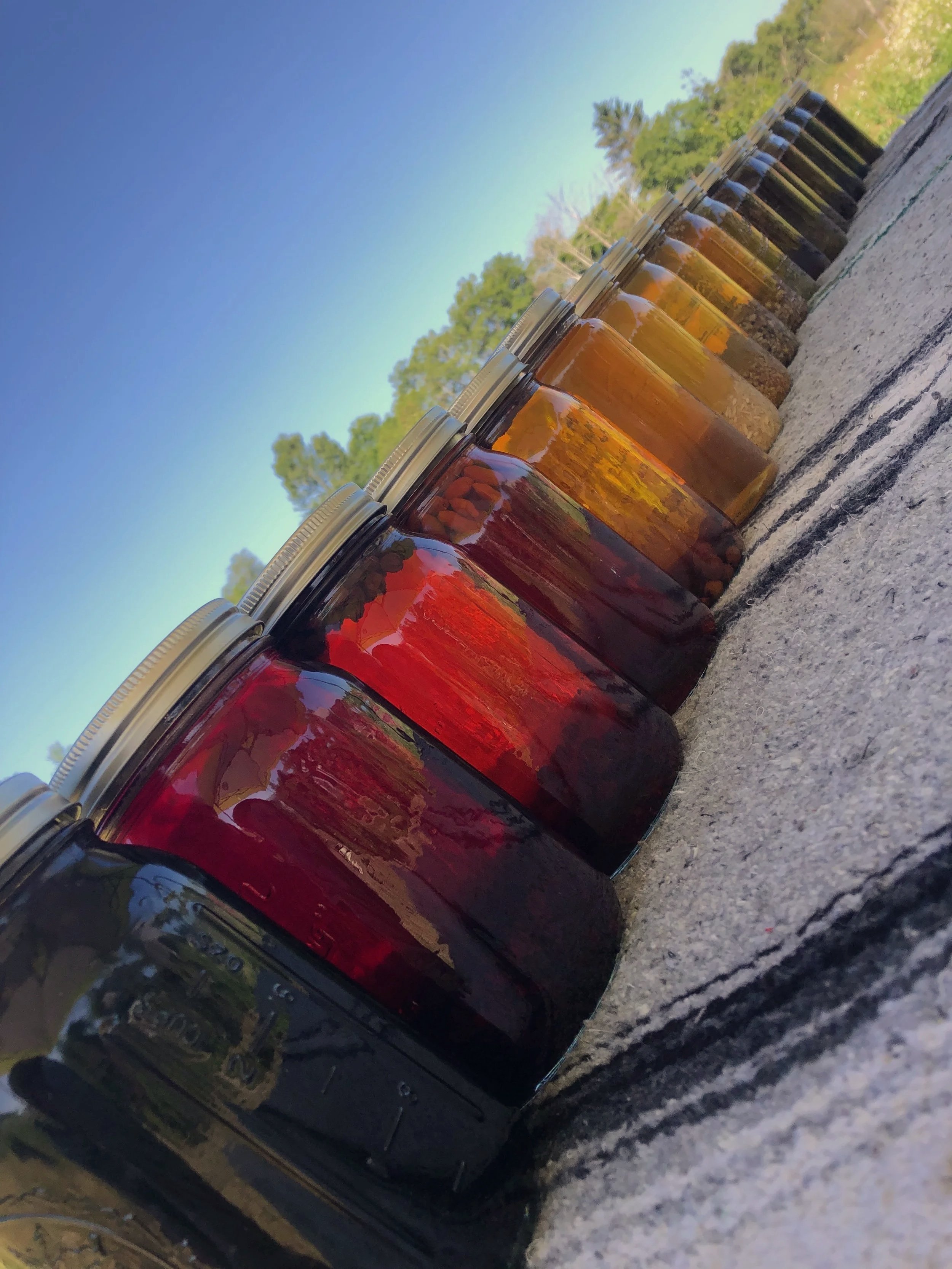
Nourishing Herbal Infusions are a simple, easy way to create a daily habit that increases your vitality and health.
Before diving into the details of herbal infusions and the way they can support your health and wellness, I would like to go on the record as saying that creating a practice that involves bringing this herbal habit into your life is an inexpensive, beautiful way to learn about herbs, create a sustainable ritual of wellness and enhance your overall well being. The simplicity of the practice of taking dried herbs, and pouring boiling water over the top could not be more grounding or effective at helping us to step into our own health with empowerment and grace. I highly encourage you to read on and learn how this simple ritual can help you heal and be nourished.
I’d also like to offer an immense amount of gratitude to Susun Weed, who created the concept of Nourishing Herbal Infusions. While she would likely not agree with everything I’ve written in this post, it is her intuition, wisdom and knowledge that have led me to this life enhancing practice of nourishment and health. I am forever grateful to her for putting me in touch with my body through the plants.
You can find links to a couple of Susun’s YouTube videos introducing the ideas around Nourishing Herbal Infusions linked at the bottom of this page.
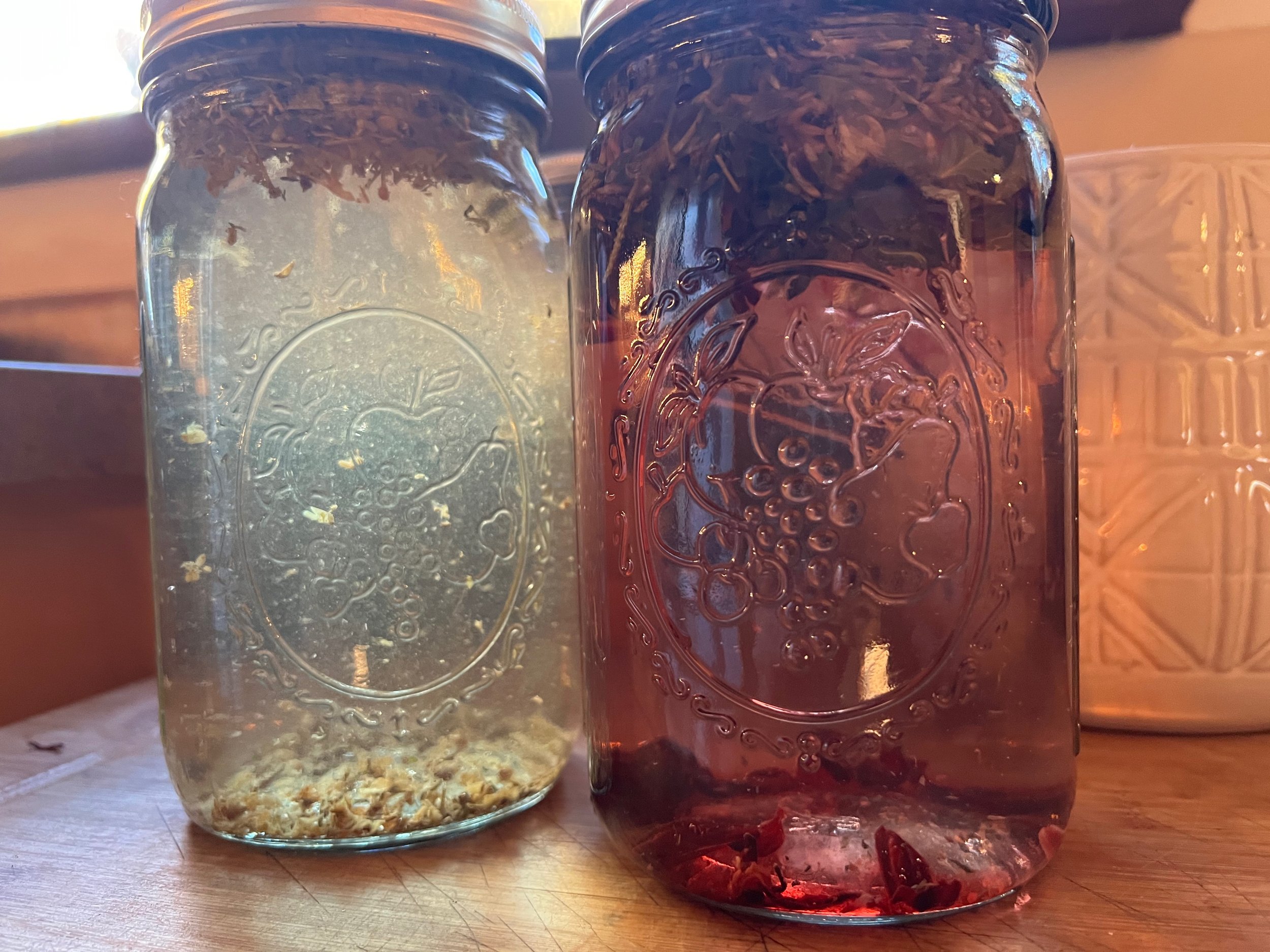
2 jars of just-poured infusion
WHAT IS AN INFUSION?
The definition of an infusion changes depending on which herbalist you are talking to. Some herbalists make infusions only with dried herbs, while others are fine using fresh. Some herbalists weigh out the herb, but like to use a measuring cup or number of spoonfuls instead. Some define infusions by the length of the time you allow the herbs to steep while others would focus on the herb to water ratio. Despite this lack of agreement, in my opinion, it's important to be clear about the quantity and method here, both for the potency of the remedy, but also the safety.
That being said, for the purposes of this article and my practice, herbal infusions are 1 dried oz, weighed out and put into a quart jar. Then, boiling water is poured over the herb, a lid is placed on top, and it's allowed to steep for 4-10 hours, or overnight.
Every infusion I make is done in this way. On average, I drink a quart of infusion 5 times a week, aiming for a different one each day , with the ultimate goal of drinking one every day.
If pregnant or nursing, or working hard/sweating a lot, one can drink up to two quarts a day for hydration and nourishment. Trust your body on this one!
HOW ARE INFUSIONS DIFFERENT FROM TEA?
There are several ways that a Nourishing Herbal Infusion is different than a cup of tea. I’d like to stress this point because so often when talking about the health benefits of infusions, even other herbalists, will say “oh yes, I drink (insert herb of choice) TEA all the time!" So let’s be ultra clear that infusions and tea are NOT one and the same, as I explain below.
HERB-TO-WATER RATIO
First, have you ever opened up a tea bag to see how much herb is actually inside…? Spoiler alert - it’s not much… so right there, you have a major disparity between tea and infusion. However, many people are regular tea drinkers and don’t use tea bags. Instead they’ll use other methods such as a french press, steeping pot, or strainer basket to make their brew. Even though these additional methods often use more herbs in the process, they very rarely compare to the quantity recommended in the above definition of what an infusion is (in bold). Using a full dried ounce of herb is a much larger quantity of herb than one would typically ingest in an entire day or possibly a week of tea drinking – even if you were making your tea strong and brewed it longer than average with alternative methods. Since herbal infusions use more plant material, there are vastly more constituents extracted, and you end up getting an elixir that is packed with nutrients. While tea itself also has a lot of nutrients, it doesn’t compare to an infusion and this is due in large part to the difference in the quantity of herbs used. See the section below on MEDICINAL CONTENT.
LENGTH OF EXTRACTION
Another way that infusions differ from tea is the extraction time. Besides being a smaller quantity of herb, tea is typically poured and drank within a short amount of time, while still hot, which is usually a matter of minutes. Infusions, on the other hand, sit around for 4-10 HOURS. The longer steeping time allows the cell walls of the plant material to fully break down and extract into the water, creating a much stronger brew.
TYPE OF PLANT
Since infusions are quite strong, it is VERY IMPORTANT to be considerate of what kind of plants you use in your infusion. Choosing the wrong plants could cause a strong extraction of constituents which should not be ingested in this quantity. As a general rule, stick to herbs that nutritive and avoid using plants that are rich in volatile oils. See more on this below. For example, peppermint and camomile are among the post popular teas that people drink, but neither of these herbs are suitable for infusions. They are far too strong to brew in such a large quantity. One giveaway that an herb contains lots of volatile oils is a strong aroma/smell. This is a good indicator that the herb would not be good for you when made into an infusion. These herbs can sometimes be added to your infusions for flavor, but just a tiny pinch will do.
FRESH OR DRIED?
To create a strong, nourishing infusion, you want the 1 ounce of plant material to be fully dried. Drying the plant material effectively concentrates it and allows for a stronger extraction. Fresh plant material is also already hydrated, so you simply would not be able to fit the same quantity of herb into the jar.
MEDICINAL CONTENT
A tea will have most of the same constituents as an infusion, just in a much smaller quantity. Consider the example of a cup of nettle tea. For this tea, we will use 1-2 spoonfuls of herb steeped in hot water for 10 mins. (Note that this is still quite a bit more than would be found in a commercially available nettle tea bag.) The resulting brew would have about 5-10mg of calcium. If you used the same dried nettle and put a full ounce in a 32 ounce jar and allowed it to steep for at least 4 hours, the resulting brew would have over 200mg of calcium PER CUP.
Another important note is that infusion for nutrient content is far superior to taking supplements. Besides being MUCH cheaper (more on that below) one thing we know about supplemental nutrients is that they are very rarely as absorbable as whole plant foods and remedies. The wisdom of the plant carries with it all the other co-factors that the body needs to absorb and assimilate the vitamins, minerals and proteins that a lab-made supplement simply does not match.
HERBS USED FOR INFUSIONS
There are a variety of things to look for when considering what herbs you will use in your herbal infusions. They should be nourishing, safe, palatable and the same herb shouldn’t be drank every single day. Each herb offers its own nutrient/mineral profile and has different medicinal actions. The actual benefits of each herb is beyond the scope of this article, although we will cover the basic 5 infusions below.
NOURISHING
Since so many more constituents of the plant are extracted into an infusion, the herbs used in infusions should be primarily nourishing. Nourishing herbs are herbs that are more like food, and less like “medicine.” In nourishing herbs, many of the benefits from using the herb come from the presence of lots of vitamins, minerals and proteins, although there are specific actions within the body that each herb provides as well.
AVOID VOLATILE OILS
While most herbs and plants have nourishing parts, many plants also have parts that would be excessive if you used them in a standard infusion. As mentioned above, a good example is peppermint. Small quantities of peppermint are delicious and healthy, but if you were to brew a standard infusion, using a full dried ounce of peppermint and a quart of water, then it would be too strong. Besides tasting too strong, the alkaloids in the plants could actually be damaging to the body. It’s the old adage “…the dose makes the poison…” This is why we would only use a pinch of peppermint in an infusion for favor. In addition, there are many herbs that would not be appropriate to use in this form at all, so it’s important to be aware of what plants you are working with.
ROTATE THROUGH THE INFUSIONS YOU DRINK
Even though nourishing herbs are very good for you, it is never recommended for you to drink the same infusion every single day. It's is best to pick your favorites and rotate through them! Nourishing Infusions are as good for you as fruits and vegetables (if not MORE), but you still wouldn’t recommend or consider eating only carrots or spinach for an entire week. Infusions are a healthy part of a well-rounded diet, but not a substitute for normal eating. To get started, it’s recommended that you begin with the 5 infusions detailed below.
HERBAL ACTIONS OF INFUSIONS
Using nourishing herbs for infusions gives multiple layers of beneft. The frst layer is the simple nutritional content. Increased intake of vitamins, minerals, etc is benefcial for the body and foundational to health. The second layer of beneft is from the herbal actions from the plants themselves. Different herbs can be focused on for different effects on the body. An example would be to focus on drinking more comfrey leaf infusion if you wanted to focus on healing your joints, tendons, ligaments, bones and skin. This is not the focus of this article.
The 5 herbs that are recommended as the basic rotation of infusions is- Nettle leaf, Comfrey leaf, Red Clover Blossom, Linden and Oatstraw. It's recommended that you start with these herbs for maximum beneft and as a basis for nourishment boost. Each of these herbs also support a variety of systems in the body. If you start with these 5, you will get a chance to see substantial benefit relatively quickly. These herbs are some of the most overlooked plants that are also inexpensive, and relatively easy to source. The list below offers you some ideas for playing with infusions, but I cannot stress enough how perfect the above 5 herbs are for beginning a practice with infusions. The cover the body’s major systems, are palatable - if not delicious, and won’t break the bank.
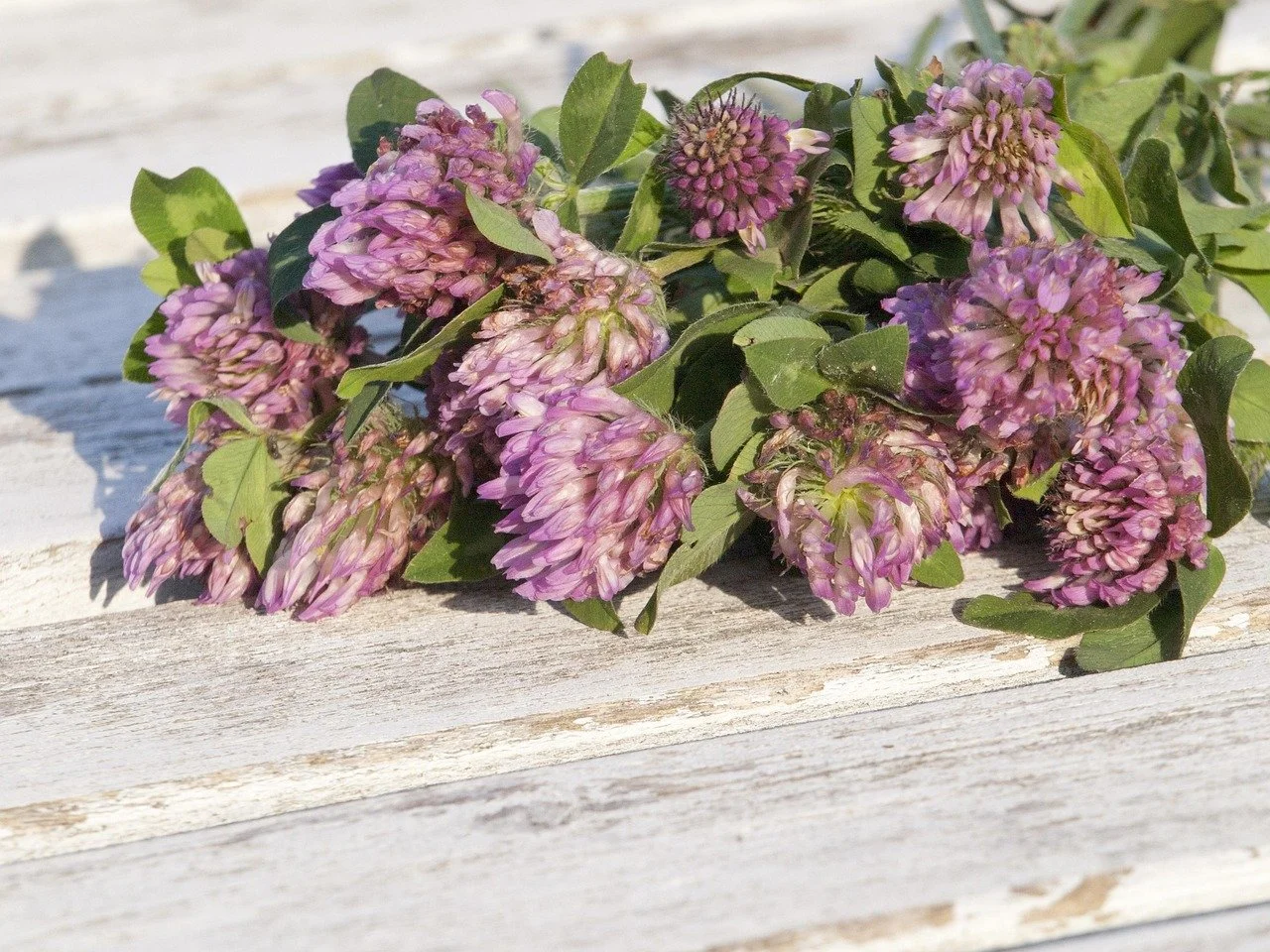
Red Clover Blossom
Below is a list of Nourishing herbs that are useful for making a standard infusion:
Please note that not all of the herbs listed below would be considered “palatable” by everyone. It is highly recommended that you start with the core 5 nourishing herbs as discussed above and the explore new herbs or blending herbs once you’ve established a good habit.
Astragalus Root Burdock Root Chickweed
Cleavers Comfrey Leaf Dandelion Root
Elder berry or Flower Fenugreek Seed Goji Berry
Hawthorne Berry/Leaf/Flower Hibiscus Linden Flower
Marshmallow Root Milky Oats Mullein Leaf
Nettle Leaf Oatstraw Plantain Leaf
Raspberry Leaf Red Clover Flower Rose Hips
Schizandra Berry Slippery Elm Bark Violet Leaf
The following herbs can be used in small quantities (a pinch) for favor in your infusions:
Cinnamon Bark Citrus Peel Ginger Root
Lavender Flower Lemon Balm Mints
(other spices as desired)
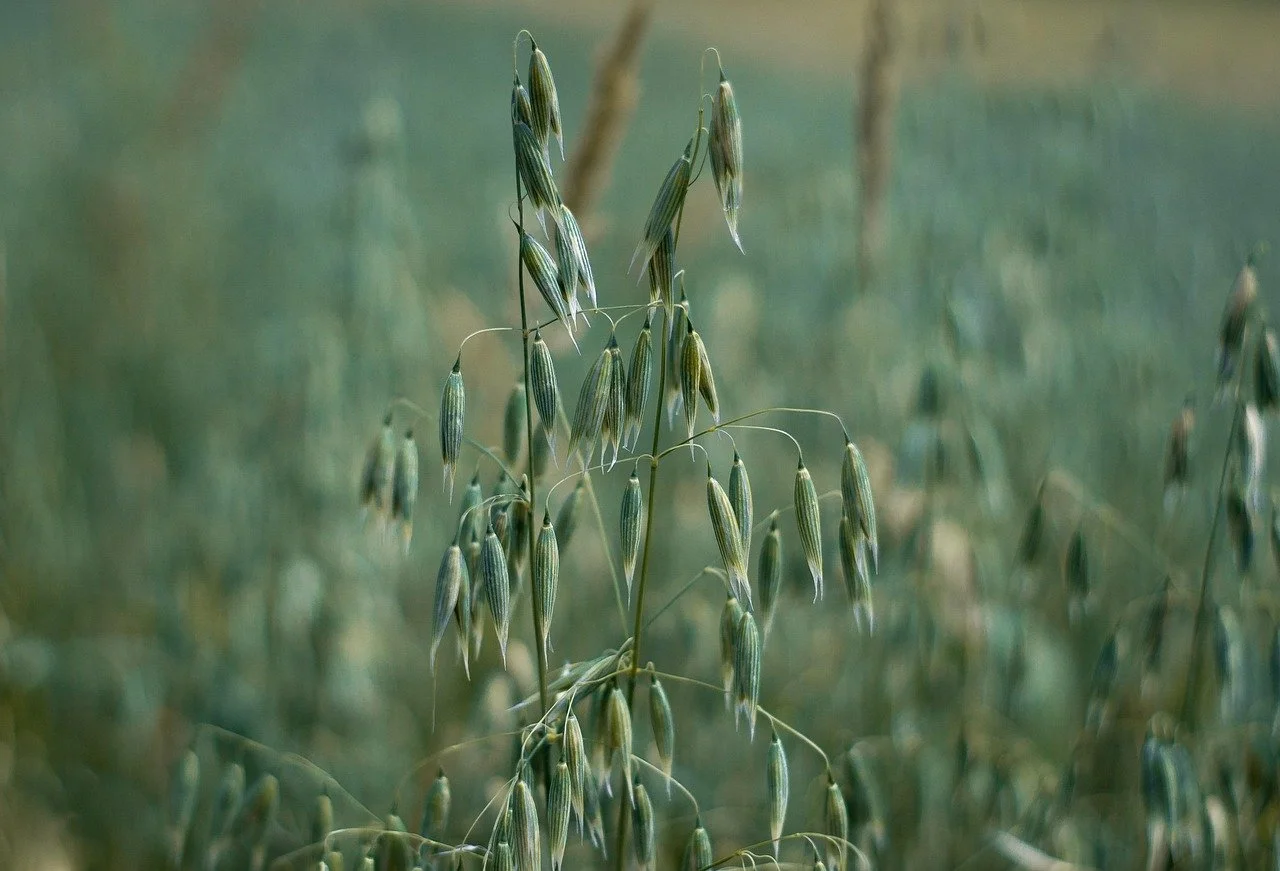
Milky Oat Tops
THE SPIRITUAL PRACTICE OF NOURISHING HERBAL INFUSIONS
IT’S A VERY SIMPLE HERBAL RITUAL OF INTENSE SELF-CARE. IT’S SO BASIC AND FOUNDATIONAL, BUT ALSO COMPLETELY DO-ABLE.
Having a daily infusion of a single plant is a spiritual practice, in not only nourishing one's self, but also developing an understanding of the taste and feel of that plant in your body. Using one herb at a time is a fantastic way to really get to know the plant. When you use one plant at a time, you meet the spirit of the plant in a way that is virtually impossible to achieve when you're working with formulas (more than one plant). It's about building a relationship with the plant. An act as basic as blending herbs, can dilute your experience with meeting a specifc plant, as well as learning from it what it does in your body. Your body will understand this plant in a way that will help you to cultivate awareness of deeper levels of nourishment as well as develop a better system for assessing your cravings and understanding what your body needs. You are offering your body a menu of bioavailable nutrients regularly so that you're awash in nutrition.
BUILDING A RELATIONSHIP WITH THE PLANTS
I’d like to offer a couple of personal stories from my experience. The first infusion I ever made and drank was over two decades ago when I was pregnant. For background, I have also always been a bit of an anxious person, and if not in personality, definitely in body - where I would hold lots of tension and tended to overwork myself. I began drinking the infusions because I wanted additional nutrients and hydration while pregnant. I chose oatstraw. I allowwed it to sit the prescribed 4 hours, but wanted to drink it right away, so when I did strain and drink it - it was still a bit warm. I was mid conversation when I began drinking it, but about 1/4 of the way through. my 32 ounce jar, I started feeling a strange sensation - a warmth and calmness was spreading throughout my body, and I especially noticed it down my legs and arms. I began feeling deeply relaxed and calm. I definitely attributed the feeling to the infusion, but just assumed the warm beverage was heating me up a bit. It wasn’t until many years later that I learned more about oatstraw, the simple grassy parts of the beloved oat plant that I realized that the herb itself was having a near immediate effect on me - specifically my nerves. The oat plant is well known for being soothing, calming, and especially nourishing to the nervous system, and it’s become a core herbal memory of mine the time I really “felt” this herb in my body. Had I mixed it with something else, I may never have learned such a potent lesson about the benefits of this plant, other than I may have attributed it to some other plant in my “formula” accidentally.
Fast forward 10 years and I decided to begin a regular regimen of making nourishing herbal infusions as a daily part of my life and health. Spurred on by hearing stories from other women who were really getting some benefit from them, I dove in and bought an entire pound of each of the basic 5. The first one I decided to make was nettle leaf. I didn’t particularly enjoy the smell or flavor, but went ahead and drank it over the course of a couple hours that morning as I got ready for, and went to work. Later that evening, work was finished, and the kid had been picked up from school, and then subsequent soccer practice. Groceries were shopped for, put away and dinner was made. It was a busy day. The dishes were done and I found myself diving into cleaning up a little extra around the kitchen. I happened to glance at the time and suddenly realized it was after 9PM - a time when I would most definitely be finding myself winding down, if not already in cozy clothes in bed… so I was certifiably shocked when I realized that my body felt like it had the energy of midday, not end-of-day… I couldn’t really figure it out until I went through the motions to brew the infusion for the next day, and that’s when it occurred to me…. the NETTLES!! Nettles are well known to give an energetic boost, among many other things. They can be SO nutritious, that oftentimes people will find them invigorating as a result. It was another one of these moments where I was so grateful to be able to experience this plant, in such a significant quantity so as to FELL IT in my body, and to know what that feeling was.
These experiences and many more have gone on to educate me about, these special, nourishing plants. Not only has my mind learned so much, but also my body is also deeply aware of the benefits - as I often find myself actually craving a specific herb. Because I’ve washed my cells in certain plant so throughly, my body is completely able to communicate to me when a certain plant is needed. What a gift!?
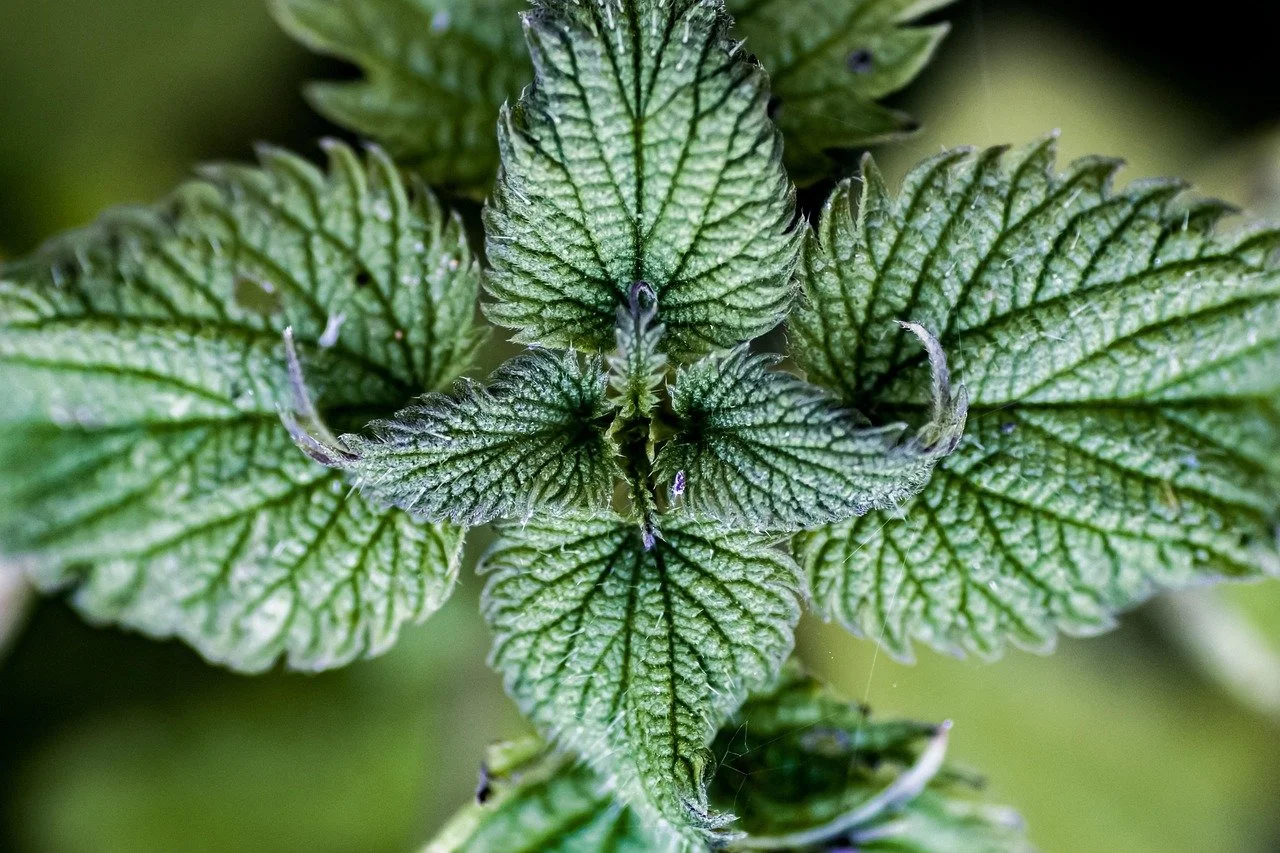
Nettle Leaf
RHYTHM, RITUAL AND PRACTICE FOR HEALTH AND WELLNESS
Routine is key. Habits matter. Over time, the small choices we make add up to big changes. This is a key and foundational aspect of building and maintaining health and wellness. The beautiful thing about Nourishing Herbal Infusions is that they are always there for you. You buy the herbs in bulk, have them on hand, and when you get off track, you can turn towards them to start at square one again. They are a deceptively simply practice. Think about your morning beverage. The world over has relationship with their daily cup of coffee or tea. Entire battles have been fought over these resources and not just because of the caffeine content - but also because of the spiritual rhythm of the daily drink. We are IN RELATION with the plants in this way, and the beauty of infusions is that they not only offer this ritual and practice aspect - but they are also SO good for you. Everyone gets off track on their health and wellness path from time to time. Sometimes we actually need to take a break - but it’s such a gift that these simple infusions - one plant at a time - have so much to offer, so generously, and so consistently. Like a good friend who always answers your call, they’ve literally ‘got your back'.
INFUSIONS VERSUS SUPPLEMENTS
COST
When first introduced to a daily infusion practice, people often balk at the quantity of herb, and sometimes say that it is cost prohibitive, or expensive. Let's look at the math, compared to an herbal supplement. The current price for one pound of Organic Nettle Leaf online: $23.50. That is 16 servings of infusion, for a cost of less than $1.50 a day. Comparatively, it's $15.50 for 100 capsules of Organic Nettle Leaf. There are 489 mg per capsule = approx 1/10th of a pound. That means in capsule form, you're paying $155 per pound for the nettle in the capsule. Furthermore, you'd take more than one capsule a day, so your cost per day would be about $0.30, but you're only getting .03 ounces. If you wanted to ingest as much nettle as you would get from an infusion, you would need to take about 35 capsules. That would mean you're paying $5.40 for your daily nettle instead of the $1.50. Also, it is well known that taking a capsule (or 35) of dried herbs is far less absorbable in your body, so you might not be getting as much out of it. This paints the picture that the infusion is much more cost effective as well as being much more delicious and functional in your body.
THESE ARE NOURISHING HERBS = FOOD!
Here is one example of a research abstract showing that dried nettles are rich nutritive source. In some ways, these are “foods” not “herbs,” and we should begin to think about using them in that style and quantity. As an example, when was the last time you went shopping for carrot capsules??
sciencedirect.com May 2020
Effect of drying methods on chemical composition and antioxidant activity of underutilized stinging nettle leaves
Abstract - Stinging Nettles provide low-cost quality nutrition for alleviating malnutrition. Previous research on stinging nettles focused mainly on the nutritional quality of fresh leaves. In this study, the effect of drying method on macronutrients, mineral content, ascorbic acid, β-carotene content and total phenols, content and antioxidant activity were investigated. The contribution of fresh, oven dried or freeze dried stinging nettle leaves to the required daily value for the nutrients were also determined. Oven drying of nettle leaves resulted in a higher loss of β-carotene and ascorbic acid content compared to freeze drying. In contrast, the total phenols content and total antioxidant activity were higher in oven dried stinging nettle leaves compared to freeze dried leaves. Overall, freeze dried and oven dried nettle leaves can be considered as a rich source of Ca, Mg and Vitamin A; a good source of vitamin C, Fe, and Mn; and a source for Mg and K. Stinging nettle leaves could potentially be used as a cheap natural source of antioxidants and for addressing micronutrient malnutrition.”
INFUSION TIPS/IDEAS
It is best to allow your canning jar to seal. Fill the jar up to the top with water, and if a little purges out when you close the lid, that is okay too. In this way, you are effectively sealing the jar and preventing possible bacteria contamination/growth during the time period when the jar is sitting out on the counter. By NOT LEAVING AIRSPACE in the jar when you make your infusion, you are lessening the chance of it spoiling.
Find yourself a funnel and strainer that work really well for you. With 2 jars/lids and a straining method, infusions are actually an excellent and easy way to bring your nourishment with you when you travel.
You can drink infusions infusions to hydrate. In fact, the nutrient content (think minerals) helps the liquid move into your cells better. Have you ever been thirsty, only to fnd yourself still quite thirsty after drinking a bunch of water? Water is a wonderful, essential part of our human lives, but this is a way of adding nutrition to your water.
If you make too much infusion at once, you can freeze it into ice cubes to use in your regular water, for cooking, or even to put in your daily infusion. Infusions also keep well for a few days in the fridge.
Cooking with infusion is wonderful. It's basically an ultra-simple broth. Consider boiling your rice or beans in infusion, or using it as a base for your next soup.
Hot nettle infusion with miso mixed into it is delicious and energizing. I often replace my morning coffee/tea/etc with this drink in winter.
The basic infusions are safe and nutritious for children.
Simple infusions made of a single herb are a perfect practice for budding herbalists.
Infusions can be drank cold or hot.
SOURCING YOUR HERBS
It is recommended that you start with the rotation of 5 listed above, and that you invest in a pound of each herb to get started. That’s almost 3 month supply (a full season of wellness) and is long enough for you to really try out the practice to determine if it works for you and how you may want to tweak it in the future. It’s also an appropriate amount of time to make a commitment to establishing a new habit. In addition, the expense is still likely to be less than purchasing a similar product in supplement form, and as long as the herbs are stored in a cool, dry place, they can keep for quite some time.
You will want to look online for herbal retailers that are committed to quality and who offer herbs in bulk. Buying the herbs at a local store is a lovely concept, but unless they offer a substantial discount for bulk purchase, it will likely make the practice unaffordable. Some of the below retailers also offer 4oz or half pound quantities if your budget is tight, or if you’re not quite ready to fully commit.
I have no financial or professional affiliation with any of these businesses.
MONTEREY BAY HERB CO - This is a great resource for bulk herbs.
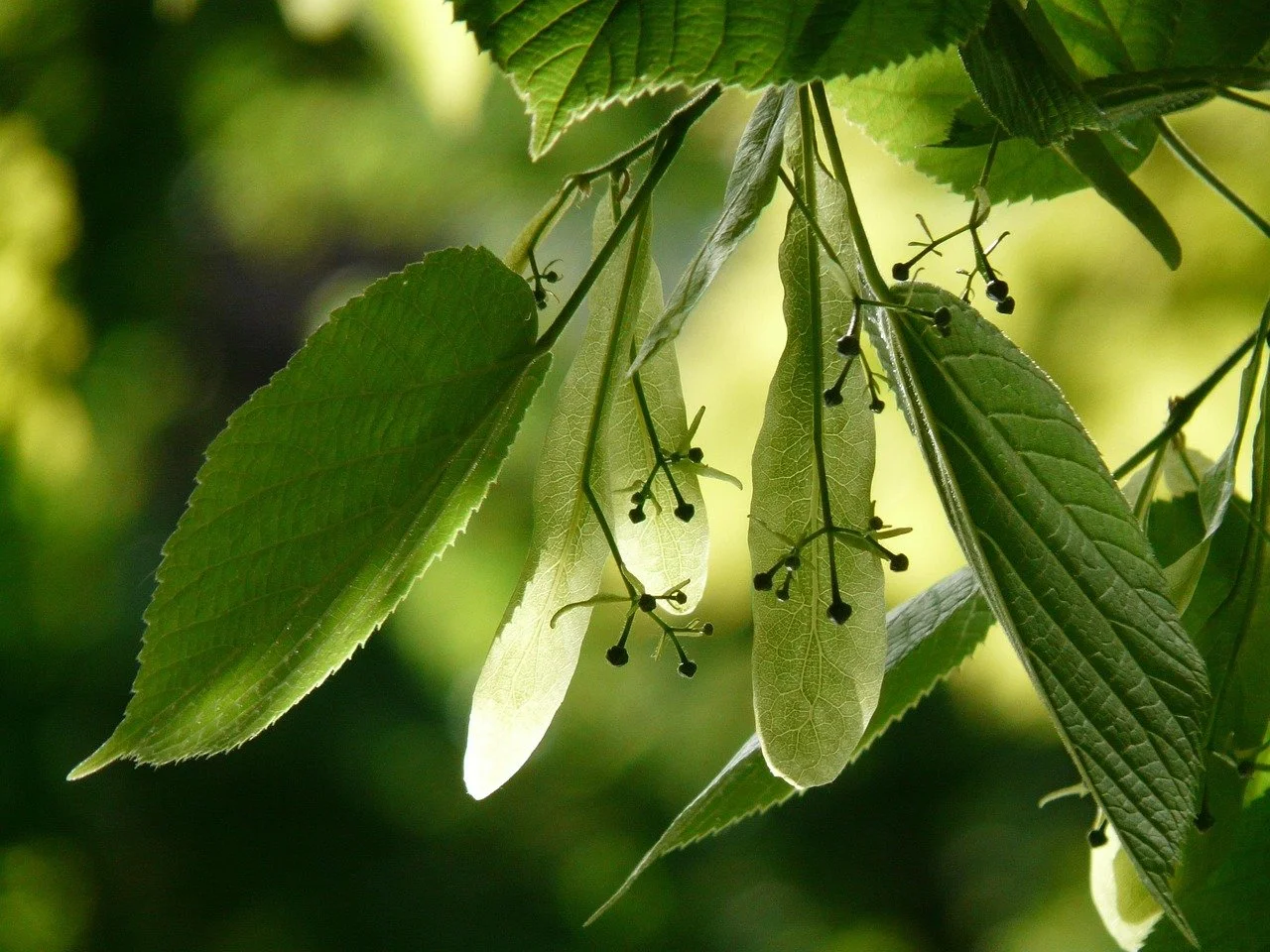
Linden Blossom
IN CLOSING
It is my sincere hope that you will give herbal infusions a try. I would love for more people to incorporate them into their wellness practice because there’s basically nothing to lose, and SO MUCH to gain. I recommend them to every single person who looks to me for diet/nutrition advice and wholeheartedly feel that they are the least expensive, most powerful way to work with herbs and increase your health.
SUSUN WEED’S INTRODUCTORY VIDEOS ON NOURISHING HERBAL INFUSIONS
Note that these videos are not posted on Susun’s YouTube page, however navigating to her page, wisewomantradition, you will find more information, where there are individual videos geared toward each of the 5 core nourishing herbs recommended, including information about the benefits that each of those herbs offer our bodies when you use them as infusions.
