DANDELION
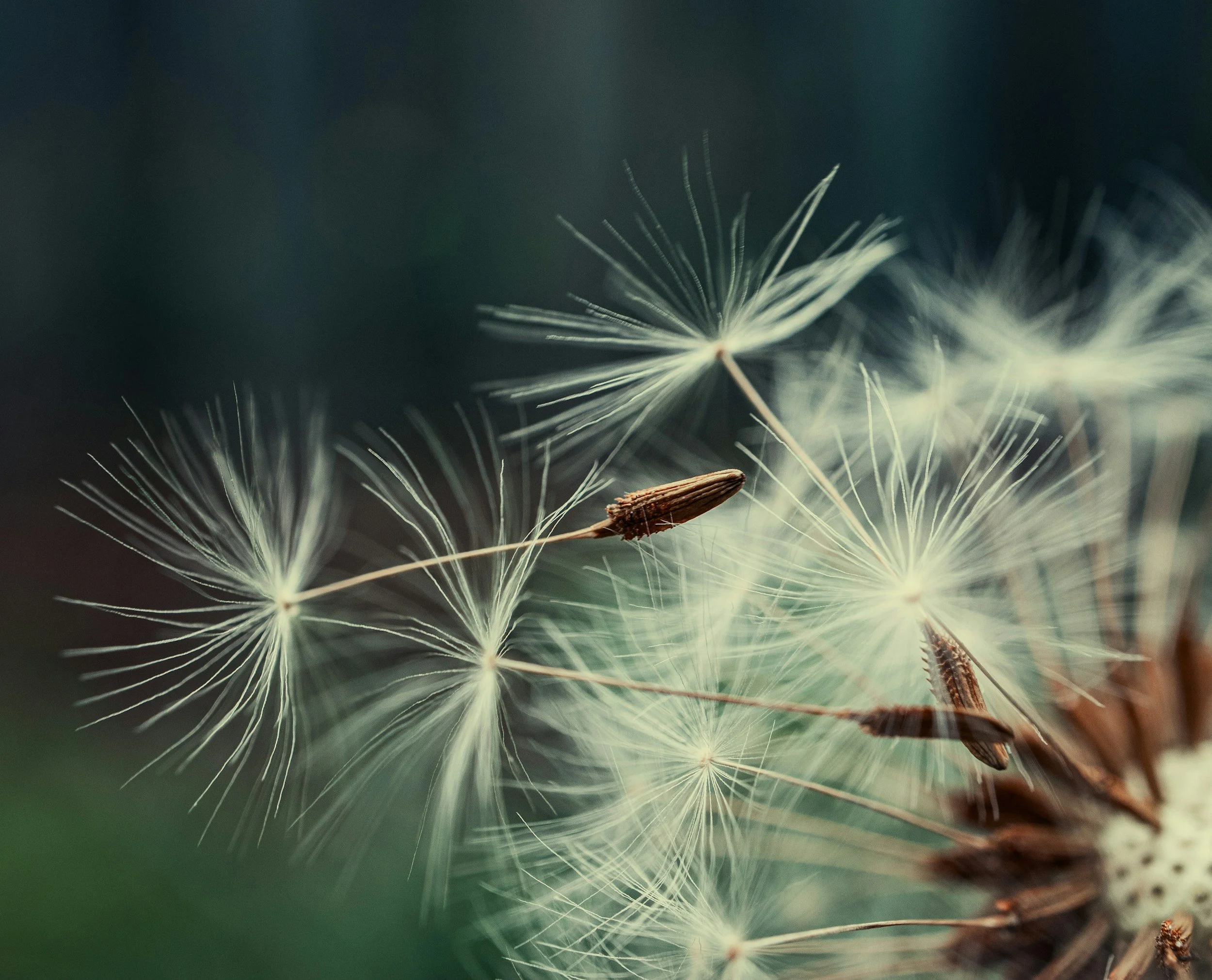
“Be like a dandelion... A whimsical wanderer in the meadows of life, scattering dreams with each whiff of breeze.”
- Monika Ajay Kaul
Few people on the earth are unaware of this humble and gifted plant. Those that do not know her, are simply not paying attention, or unfortunately missed an entire aspect of childhood whimsy. This simple, easy-to-find, safe-to-enjoy and useful plant grows all over the planet and yet, has been vilified for “messing up” the lawn or growing somewhere she ought not to.
BOTANICAL NAME: Taraxacum officinale
OTHER NAMES: Dandelion has names in English, Spanish, French, German, Chinese, Greek, Italian, Hindi, Farsi, Swedish, Portuguese, Polish, Norwegian, Korean, Japanese, Gaelic, Finnish, Dutch, Hungarian, Serbian, Romanian, Russian, Turkish and more. You get the idea… It would probably be easier to list the languages that do NOT have a word for this plant. Some other English common names are: Lion’s Tooth, Piss-in-bed, Blow Ball, Fortune-Teller, Doonheadclock, Tell-Time, Clock Flower, Swine Snort, Puffball, and more. Translations of the name from other languages offer terms such as Butter Flower, Horse Flower, Lion’s Tooth, Monk’s Head, Children’s Chain Flower, and Wool Head… And there are more…
ORIGIN: Though Dandelions can be found all over the world except for Antarctica, they are thought to be native to temperate Eurasia. Like people, or likely because of people, they have found footing in the ground all over the planet.
PARTS USED: The ENTIRE plant can be used - whole flower, flower buds, flower petals, leaves, roots, heart/crown, bud/flower, stalks/stems. Even the puffball of seeds is considered useful for whimsy and magical intent.
BASIC INFORMATION: There are more than 1000 Dandelion species across Europe, with more than 250 just in the Britain, A perennial native to Greece, this plant is thought to have been brought along when people travelled the globe to settle new areas. This plant is often considered a troublesome weed and is often found growing and blooming year round in temperate regions. In areas where Winters are more sever, the Dandelion will continue to bloom well into Fall and early Winter and often will be one of the first flowering plants to be found in Spring, making them an important plant for bees because they supply a lot of nectar and pollen in the early Spring when not much else is blooming and the bees are in need of food after the Winter.
Dandelions can be found growing as a wild weed or can be grown in your garden with your other cultivated plants. Dandelions seem to really appreciate a place in your rich gardens soil, and herbalists often enjoy growing their own plants because they are so easy to grow and can be extraordinary in size and quality. There is also something to be said, however, for the humble WILD Dandelion, who makes her way in the world so well without the tender gardener’s touch. Each has their own qualities to enjoy and a truly curious herbalist would experiment with both, depending on the desired effect.
HISTORY: This plant was first written about in the Tang Materia Medica of the 7th Century in China and later by the Arabian physicians of the 10th and 11th centuries. Dandelion was said to be a favorite of the great Arabian Herbalist Avicenna, and was known in all of the great cities of Asia Minor. The Latin name Taraxacum may have come from the Greek words “taraxos” which means disorder, and “akos” which means remedy. The Welsch Physicians of Myddfai of England were known to have used it during the 13th Century and it was used later in India as well. Historically in Europe, the juice of the Dandelion was used as the primary medicinal preparation. There are records of it being used to remove spots and freckles on the skin in Greece and in Germany it was recorded as being used as a sedative in the 16th Century. At this time, the herb was known in British apothecaries as Herba Taraxacon or Herba Urinaria and was considered a valuable remedy. The leaves were said to be a regular part of the diet of the soldiers of Rome. By the 19th Century, Dandelion had become a potherb in Europe and America, which is a name for any greens regularly eaten as a part of the usual daily diet.
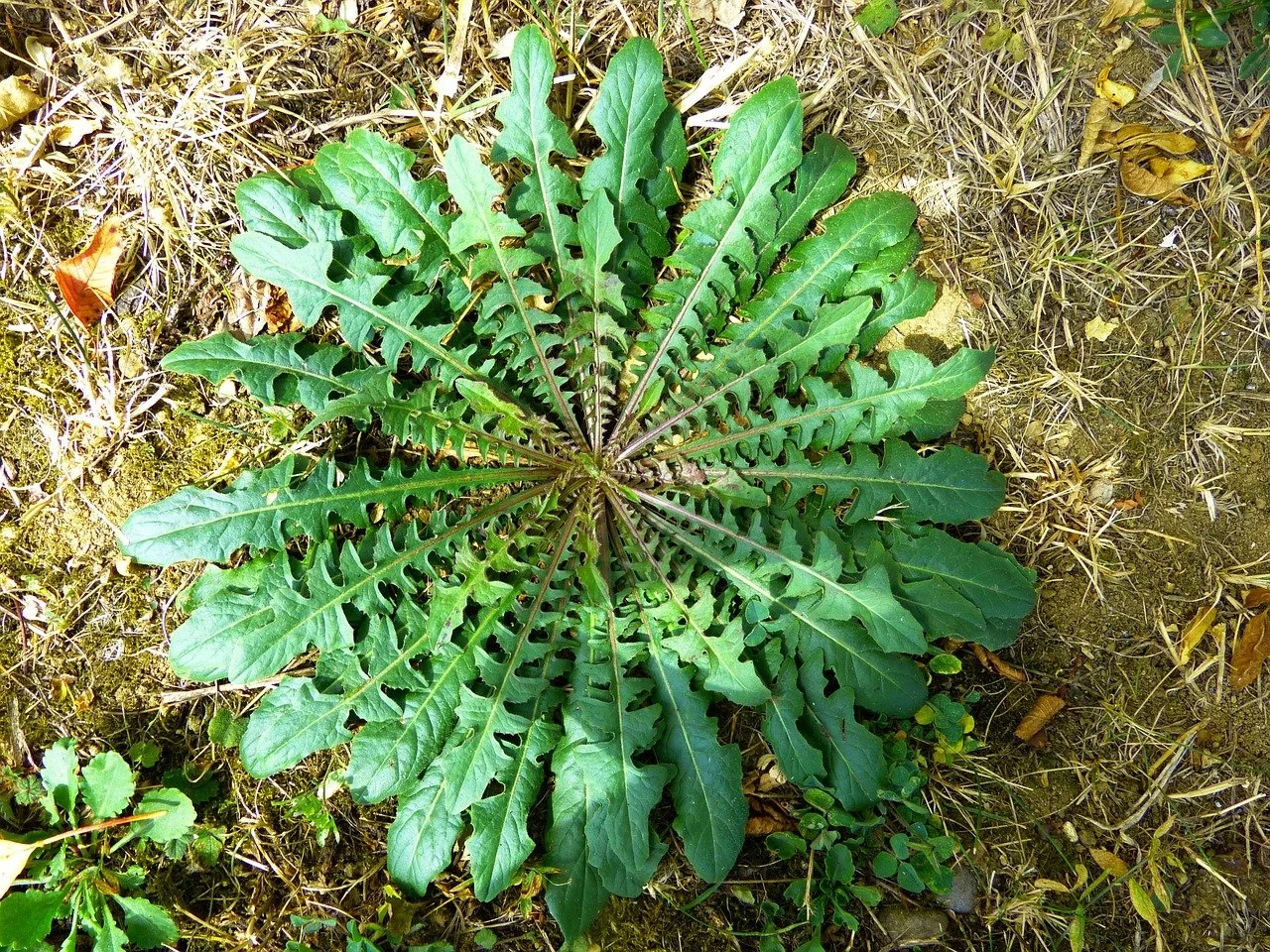
PLANT DESCRIPTION: Dandelion has a rosette of leaves coming out of a central crown, which lay in such a way that they can collect the maximum amount of water and send it perfectly down toward the root. The leaves do not come off of a central stem, but come together at the base to form the crown. The overall plant size can vary greatly, ranging from as small as an inch or two, all the way up to 20+ inches across!
The leaves are shiny and do NOT have hairs on them. The leaf edges are jagged and vary in size, shape and quantity, with the size being in proportion to the overall size of the plant itself. The leaves can range in size from 2-12 inches long. The base of the leaves come together at the top of the long, typically non-branching tap root.
The tap root can have some small branches coming off of it, and also has smaller hair-like roots as well, but there is usually one main root. The root can reach up to a foot long, and ranges in thickness up to 1 inch across. Older roots can produce multiple crowns or leaf heads.
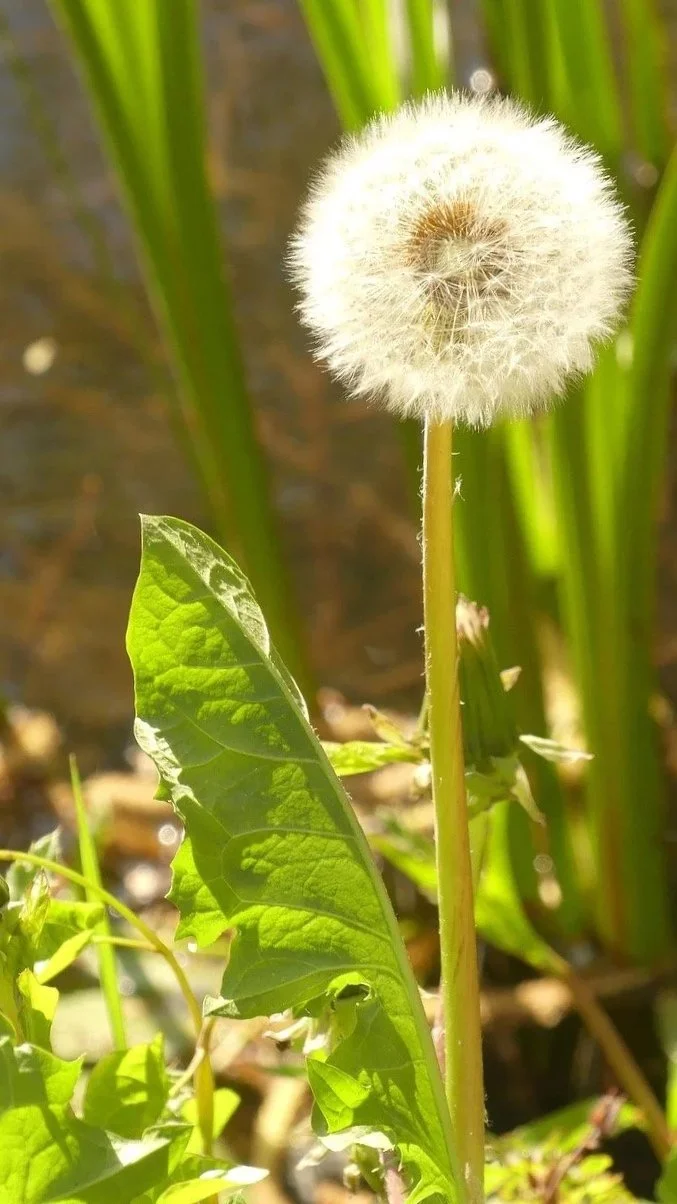
The stalk of the flower is smooth and lighter in color than the leaves, with some hues of purple as well. The flower stalk itself has no leaves and is hollow inside. One flower grows at the top of each stalk. The flower stalk may be as high as 27 inches, or might be very short, hugging the rosette, but usually averages around 5 or 6 inches.
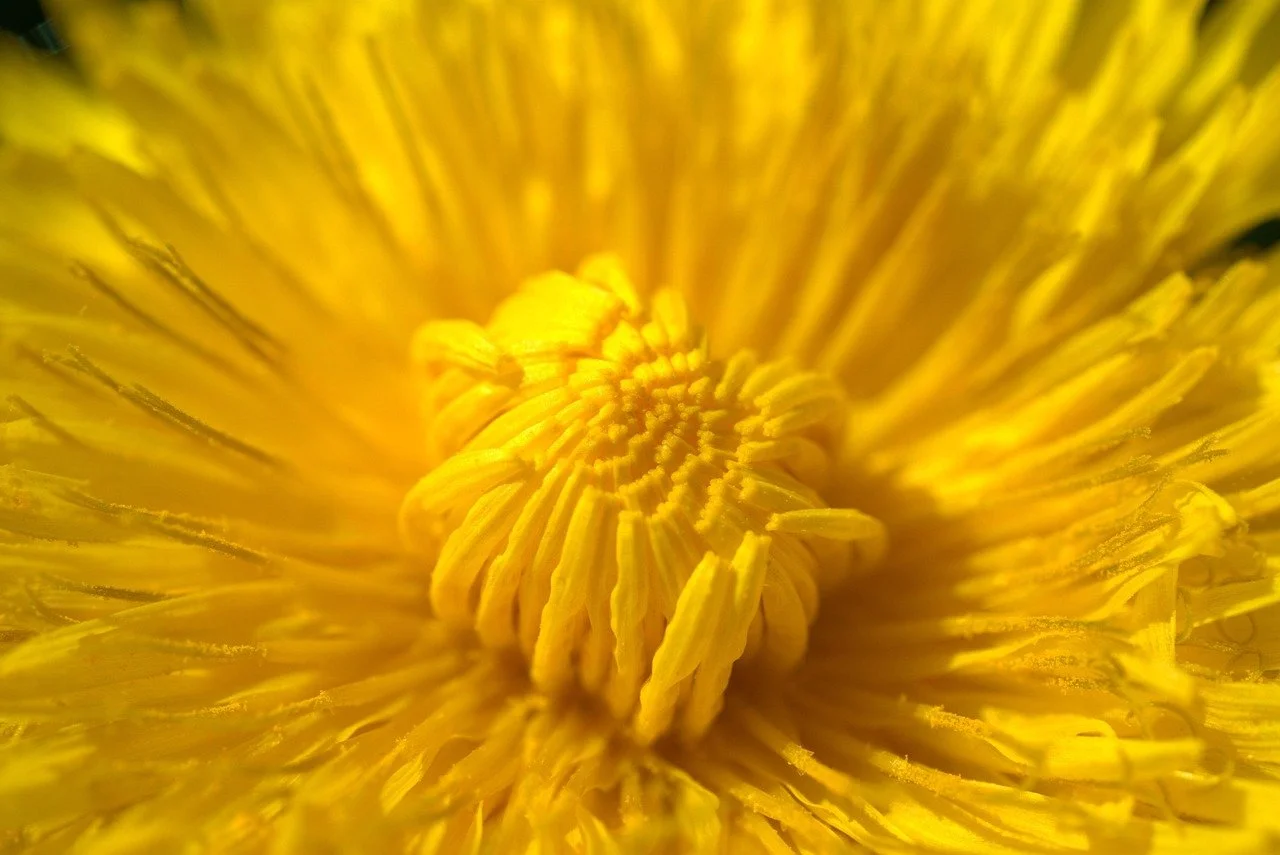
The flower head is made of bright golden petals, which are actually each tiny flowers (florets) themselves. The flower o ranges in size from 1-2 inches across. The Dandelion flower changes shape throughout the day, opening most fully when the sun is highest in the sky, and closing down somewhat as the sun begins to set. The flowers will sleep through the night, and then open up again when the sun comes back out. The flower shape will even change according to different types of weather, including closing up tight if it seems like it might rain. The flower stays open for several days to get pollinated, and then closes up and drops the petals to form the seed head.
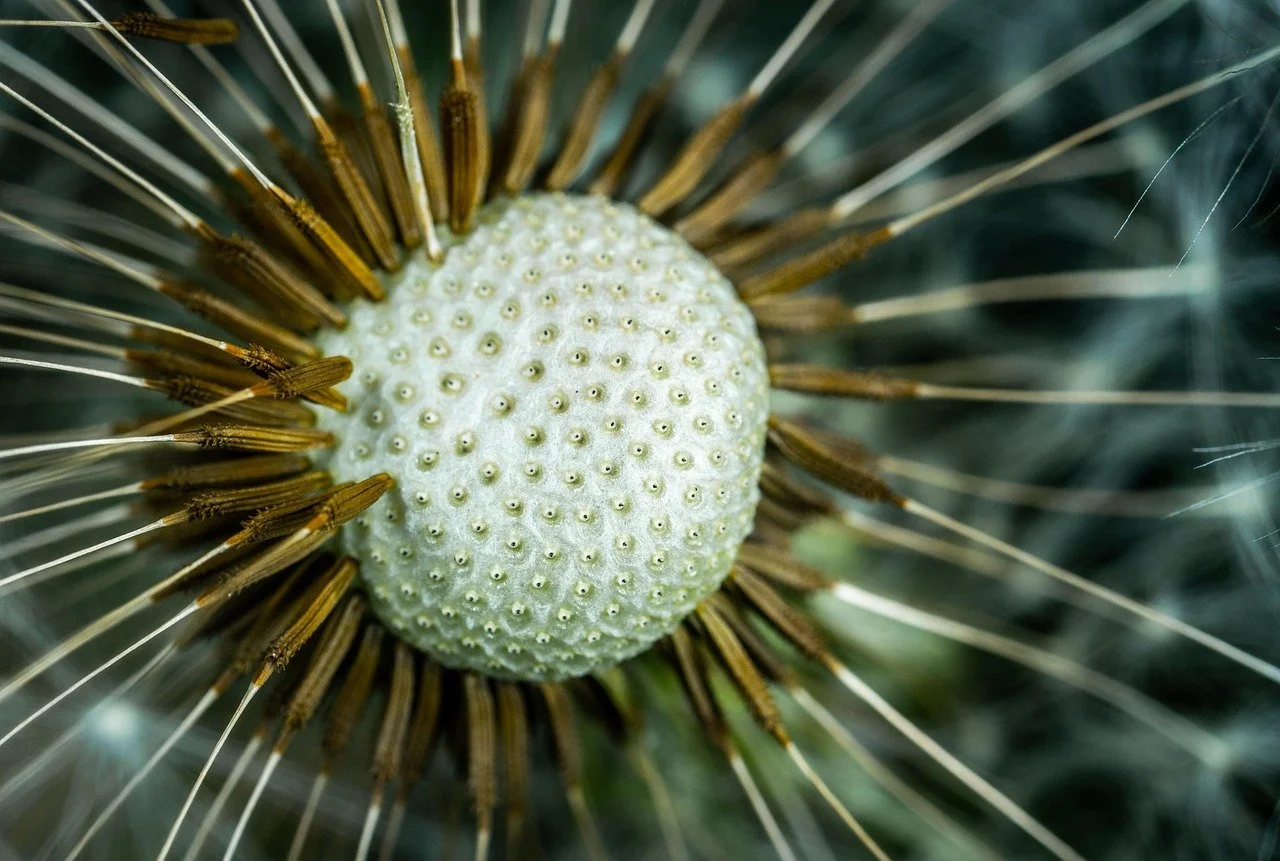
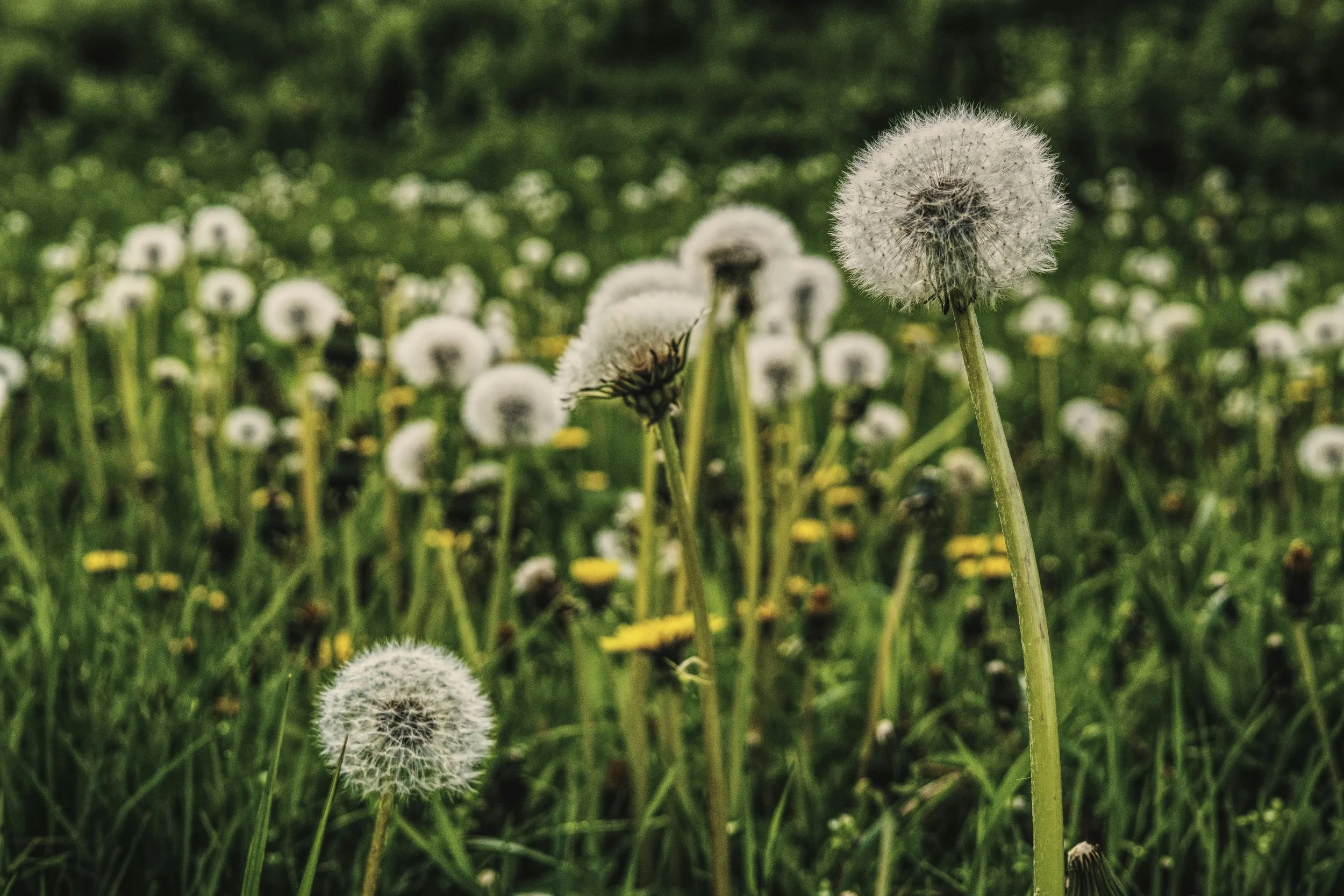
The seed head is made up of several parts. The seed base, which is technically a fruit, contains the actual parts needed for reproduction an dis called Cypselea. Coming of of the seed base is a feathery contraption that has a tuft of bristles at the top which are made up of lightweight, branched hairs. This feathery top is called a pappus. Together they are called achenes, which is the name for narrow seeds with parachute-like tufts that are carried by the wind. There is one of these seeds for each of the florets within the flower head of the dandelion. Together, the many seeds form a fluffy seed head which takes several days to mature. While the seeds are maturing, before the seed head emerges, the flower stalk continues to grow and becomes longer, raising the fluffy seed head higher and higher up so that it will be more likely to reach the breeze. Eventually, the seed head opens up, and the wind catches the fluffy tops and carries them off to find a new place to germinate and begin the whole process again. Each seed head contains approximately 100-200 individual seeds, which can be carried for many miles by the wind.
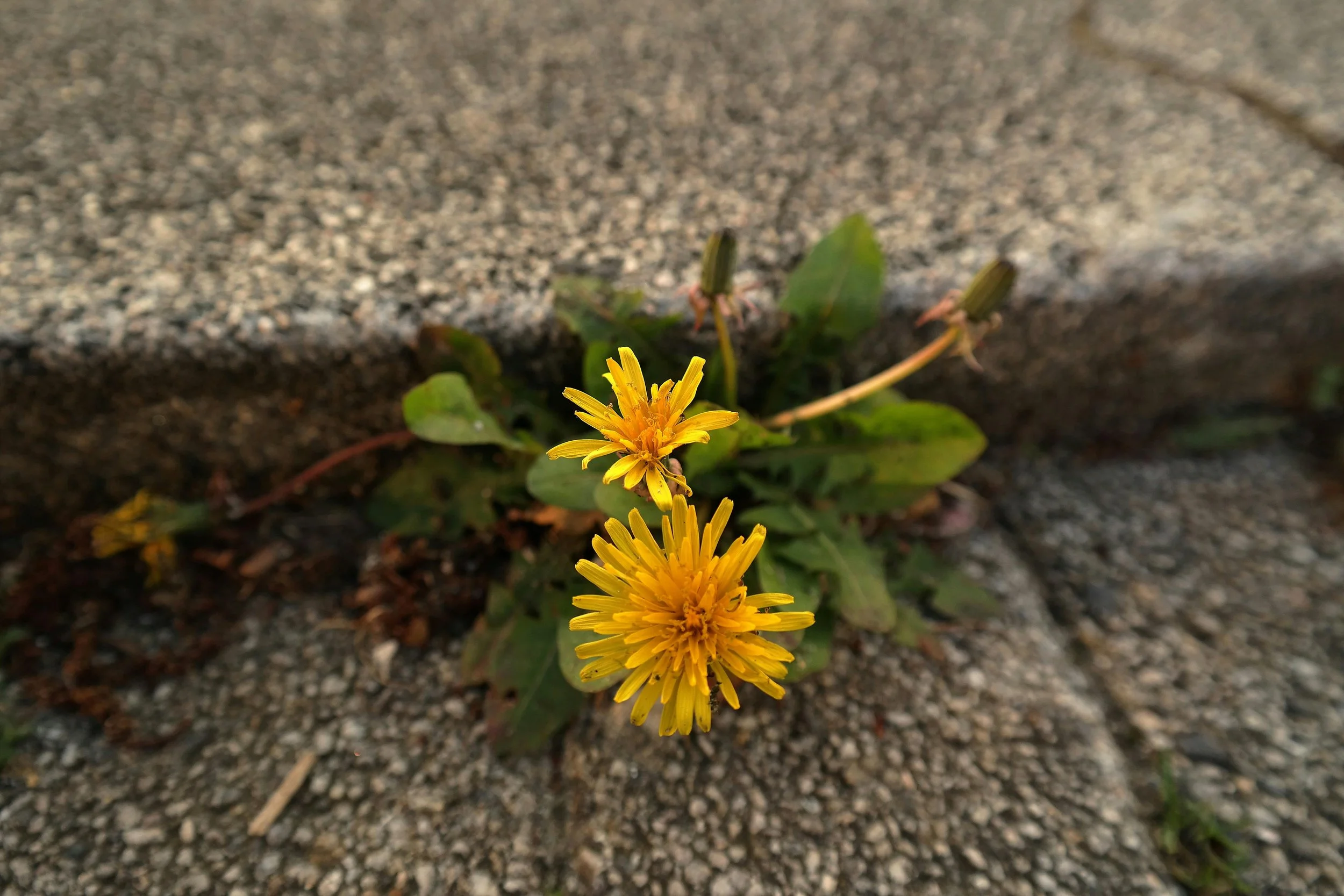
GROWTH HABITS: Dandelions do prefer good quality soil, which will produce larger, stronger plants, however they are opportunists and will take root almost anywhere, including in cracks in the concrete and in areas where the soil is poor. Dandelions will grow in full sun to partial/majority shade. Dandelions self-seed easily, and their seeds can float aloft on the wind for long distances. The seeds are also easy to collect and save.
OTHER FACTS: Dandelion’s most notable feature is the bitter, white milky latex that oozes out of the leaves, stalk and root when they are broken open. A dandelion can reproduce itself without any other dandelions to pollinate it. An individual Dandelion plant can live for up to 10-13 years and the seeds can wait in the soil for up to 5 years before germinating.
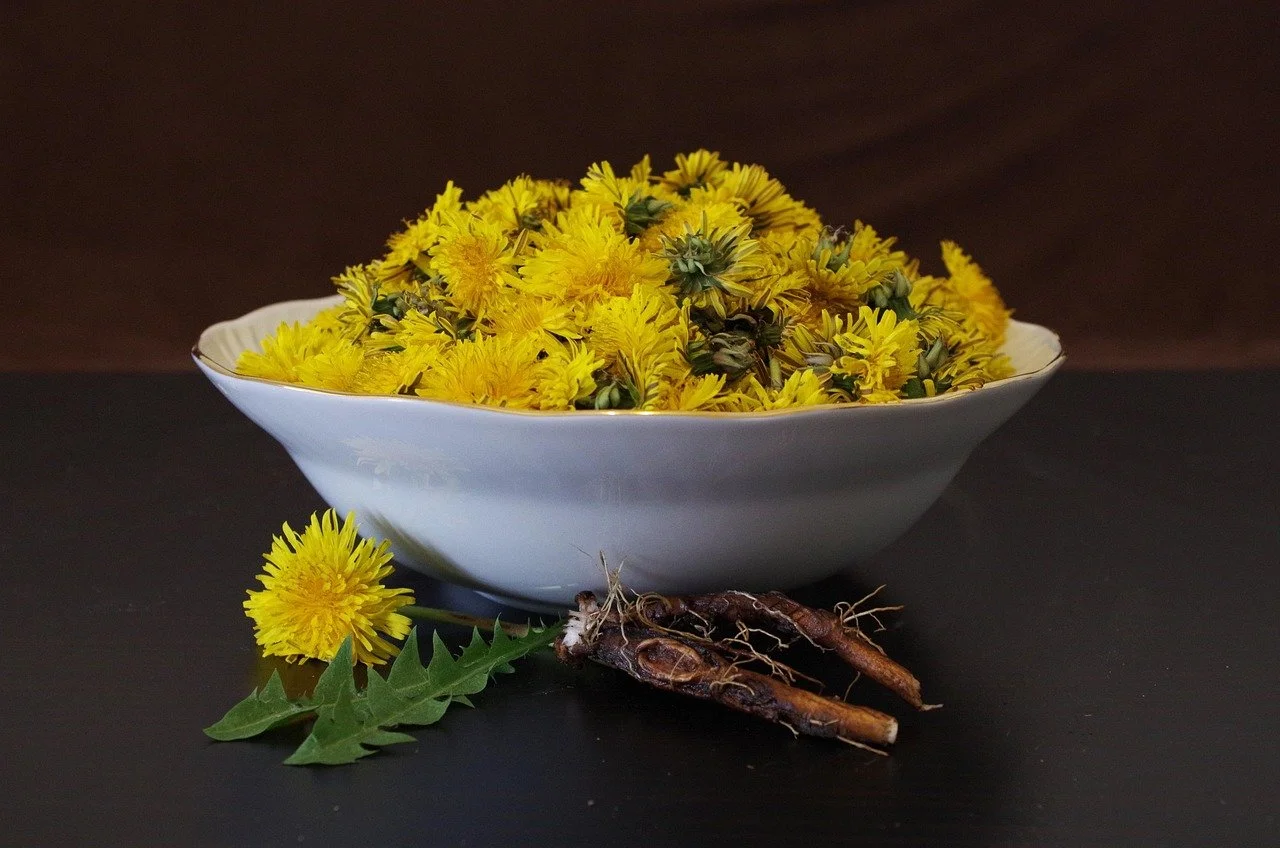
HARVESTING THE ROOT: The Dandelion root is best harvested from plants that are at least 2 years old. Opinions vary on the best time of year to harvest the root. Some say the best time would be in the Summer, between June and August, when the roots are the most bitter, while others say that harvesting in the Fall or early Winter, at the end of the growing season is the ideal time because the plant is going dormant and will be investing all of it’s energy into the root. The root should not be harvested during frost or deep Winter. In the Spring, the plant is taking energy from the root to produce many leaves, flowers and seeds, so the root is not as potent at that time.
To harvest the root, you should dig carefully around the base of the rosette, to find the tap root. Then dig down around the root itself, until you reach the bottom, if possible. If the soil is very soft and loose, the tap root cab be pulled on, and the entire root will often just come right out. Once the root is out, it can be cleaned gently with plain water, but should not be rubbed too vigorously. Simply rinsing the root will suffice. Take care not to break the root during harvest, because doing so will allow the important milky latex to seep out. Dry your dandelion roots whole if possible, and cut them once they are dried. If you are using them fresh, then cutting them first works fine.
MEDICINAL PROPERTIES OF DANDELION: Dandelion is known as a slow-acting tonic herb, which means that it is medicinal because it nourishes the body’s systems. it has a cooling action on the body as well, with the roasted root considered slightly less cooling.
Dandelion leaves and root have been associated with supporting all aspects of the digestive system from the stomach and intestines, to the liver and gallbladder, which are organs that aid in the digestion of food. A healthy liver is known to help keep the skin clear and healthy, so if Dandelion is considered to help support the skin against conditions via the liver. The root also contains inulin during much of the year. Inulin is a pre-biotic which helps the colonies of intestinal bacteria. Inulin is also soothing to the digestive tract. There is some evidence that inulin might be helpful in treating cancer. The roots are considered adaptogenic, which means that they support many parts of the body, can be used for long periods of time and help to regulate body systems that are not functioning well.
The leaves are known to be a very good diuretic, which means they help to remove excess fluids from the body. many diuretics cause problems with the mineral balance of the body, but Dandelion leaves are so packed with minerals that this is not an issue with using this plant in this way.
The milky-white latex can be used on warts, sores, blisters, corns, bee stings, hard pimples and just about any other skin spot as a treatment aid.
Consistent use of Dandelion root as a medicinal remedy and of the leaves as a food can help raise general energy levels and promote overall immunity.
LIST OF HEALTH CONDITIONS THAT DANDELION MIGHT REMEDY: Abscesses, Anemia, Bedwetting, Bronchitis, Cancer, Chronic Inflammation, Circulatory Problems, Cold Sores, Constipation, Cysts, Diabetes, Eczema, Fevers, Fibroids, Fluid Retention, Gallstones, Gas/Bloating, Headache, High Cholesterol, High Blood Pressure, Hypoglycemia, Infections, Insomnia, Lack of Appetite, mastitis, Obesity, Rheumatoid Arthritis, Sleepiness, Stomachache, Stress, Tumors.
EATING DANDELION: Dandelion leaves are more nutritious than spinach! The plant is best known for its bitter qualities. The leaves are least bitter when they first come up in Spring, and before the plant has begun flowering. As a general rule, the smaller plants and leaves are typically more bitter, whereas larger plants growing in wetter conditions can very mild. Taking a small taste of the leave before you decide how to eat or cook it will give you some idea of how bitter it is, and since different people react differently to the bitter taste, it’s helpful to try it out for yourself. If the young leave still taste too bitter for you, you can soak them in cold water for 15-20 minutes before eating them as a salad.
The center rib of the older leaves can be more tough and more bitter, and as a result are not eaten raw at all. The young leaves can be eaten raw or cooked, but to eat the older leaves, bring them to a boil and then drain the water, repeating the process up to 3 times before eating to removed excess bitterness. Dandelion leaves contain a large quantity of Vitamin A, at 7000IU per ounce. (As a comparison, carrots only have 1275IU of Vitamin A per ounce.) Dandelion is also high in Potassium and Vitamin C, and in smaller quantities also contains Calcium, Chromium, Vitamin D, Iron, Manganese, Phosphorous, Riboflavin (Vitamin B2), Selenium, Silicon and Zinc. Cooking the leaves will make more of these Vitamins and Minerals available to your body.
Dandelion roots are often eaten as a regular vegetable in France and Germany. In the US, we typically use the root as a tea or infusion. The root harvested in Spring is less bitter, and tastes sweeter. The root’s liver-supporting medicinal action is not as strong in the Spring, but the root is more nourishing as a food source and has more inulin (pre-biotics) present during this time. The root is a good source of iron. The roasted root tastes less bitter and slightly sweet and makes a brew somewhat resembling coffee.
The Dandelion crown is also a wonderful edible vegetable, being harvested before the leaves have come up in Spring and rinsed throughly, the crown can simply be chopped and sautéed.
RECIPIE IDEAS AS A MEDICINAL REMEMDY:
Dried Leaves and flowers added to skin washes, facial steam or bath tea. Flower infused in oil for topical use. Juice of the fresh leaf or root. Tincture of the leaves and/or root. Tea of the fresh leaves or flowers. Tea or infusion of the root, raw or roasted.
FOR USE AS A FOOD (WHICH IS STILL MEDICINAL):
Herbed-butter/compound butter with leaves, flowers/petals, grated fresh root. Fried flower fritters. Fermented (pickled) leaves, roots and/or flowers and buds. Flowers and leaves in wild salads. Vinegar infusion/tincture of the leaves, root and/or flowers. Flowers fermented into wine. Leafy green used anywhere you might use spinach or kale. Root made into “coffee”, or mock-mocha added into hot cocoa. Oil-marinated dandelion buds. Sautéed leaves and/or buds. The crown (place between where the root and leaves meet) can be cut up and cooked, somewhat resembling artichoke hearts.

LEGEND, LORE AND A LITTLE BIT MORE…
The name Dandelion comes from one of the French names for the plant: Dent-de-lion, which means lion’s tooth. This name is inspired by the jagged leaf edges that resemble the teeth of a lion.
Dandelion is said to be under the dominion of the planet Jupiter and it is considered to be sacred to Saint Bridget. Because Dandelions react so much to the weather, people used to use them as a barometer to predict the skies.
Dandelion has a reputation as a Spring tonic in Europe, where the leaves were eaten in Springtime, most likely because they were among the first edible plants to appear after winter.
While Dandelions are known in the US today as the most pesky and common lawn weed, there was a time when Dandelion was revered for its bounty. In the coldest climates, people would bring the root indoors in the fall and keep them in their cellars, forcing them to grow with warmth, when they chose, in order to enjoy them as a food throughout the winter. This is a far cry from the MILLIONS of dollars spent annually these days in an attempt to eradicate this humble plant.
For fun or function, Dandelion stems can be used just like a straw. Very strong stems can also be used as an instrument, by blowing forcefully into them!
The flowers can be used to make green and yellow dyes, while the roots create a magenta color.
Dandelion leaves can be given to dogs as a part of their diet as well.
A decoction of the flowers is said to fade freckles.
It is also said that regularly eating dandelions can improve the tooth enamel.
THE DANDELION SEED HEAD: It is no doubt that the most recognizable part of the Dandelion is its magical and fluffy seed head. In fact, most people assume that ANY plant with a fluffy seed head is a Dandelion, which is not always the case.
The Dandelion’s seed head has been used for centuries as an oracle in folk traditions. It can be used to send well wishes or messages to friends and loved ones by blowing your wish/message into the seeds as the wind carries them away for you.
Find a full head of seeds, give it 3 blows of your breath and count how many seeds stayed clinging to the stem, which foretells the number of children you are destined to have (or how many times you will get married, or what time it is...or??)
Some say that if you can blow all the seeds off the seed head in one blow, that means you are loved passionately, and that if there are few seeds left, that your lover still has some reservations. If there are a lot of seeds left on the Dandelion head, then you are only loved a little bit by that person, or possibly not at all.

QUOTES ABOUT DANDELIONS:
“Many a wishes that I blew, finding myself was the one that came true.” - Anamika Sharma
“It gives one a sudden start in going down a barren, stoney street, to see upon a narrow strip of grass, just within the iron fence, the radiant dandelion, shining in the grass, like a spark dropped from the sun.” - Henry Ward Beecher
“Look at the lovely dandelions growing through a crack in the pavement. Maybe, you’re one of them. Maybe, we all are.” - Bhuwan Thapaliya
“Why doesn't constant trampling defeat the dandelion? The key to its strength is its long and sturdy root, which extends deep into the earth. The same priciple applies to people. The true victors in life are those who, enduring repeated challenges and setbacks, have sent the roots of their being to such a depth that nothing can shake them.” - Daisaku Ikeda
“No creature is fully itself till it is, like the dandelion, opened in the bloom of pure relationship to the sun, the entire living cosmos.” - D.H. Lawrence
“Most of the dandelions had changed from suns to moons.” - Vladimir Nabokov
CLOSING THOUGHTS: The Dandelion is intertwined with movement of cultures and civilizations all across the earth. People have historically felt that this plant was so important as a food and remedy that they carried it with them, depending on it to grow well wherever they next found themselves rooted. It is only recently that modern American culture has declared war on a such a generously giving plant, who is humble, easy to grow, and clearly a useful resource for humanity.
A lot can be learned from this plant, whose offering is so great, despite being trodden on for so long. Its story is one of travel, resilience, flexibility and evolution. It speaks to those qualities in us all, and indeed, it’s many nourishing and medicinal actions in and on our bodies support our own resilience in a changing and challenging world.
For a full reference list, please email: weboflifewellness@gmail.com
